Up next in 10


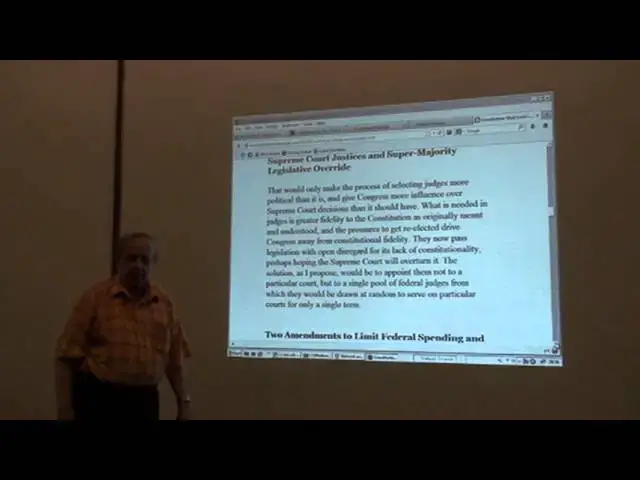
Jon Roland at Austin Constitution Meetup, 2013/08/20, reviews book by Mark Levin and critiques his proposals for amendments to the U.S. Constitution.
See http://constitutionalism.blogspot.com/2013/08/mark-levins-liberty-amendments.html
Show More Show Less View Video Transcript
0:02
this is the third segment of the August
0:05
20th 2013 Austin Constitution beat up
0:10
I'm John Rolla
0:12
the topic of this segment
0:14
is
0:16
a new book by Mark Levin who is a
0:20
well-known political commentator
0:23
called The Liberty amendments
0:28
he makes 10 basically 10 proposed
0:32
amendments
0:33
in that book and our our views for an
0:37
article 5 Constitutional Convention as a
0:41
way to get them adopted
0:43
now I have to command Mark for giving a
0:47
lot of thought to this
0:49
uh in the course of writing a book he's
0:51
done some excellent research however
0:56
the Amendments he's actually proposing
0:58
are not that well thought out
1:02
in fact many of them we have adopted
1:04
would make the situation he
1:07
intends to solve even worse
1:11
so
1:12
it demonstrates once again a point I've
1:16
often made that many of the Constitution
1:19
is not a job for people who don't work
1:24
at this on a regular basis and have
1:28
think through all the ways that can go
1:32
wrong
1:34
when you amend the Constitution you have
1:37
to anticipate all the ways that an
1:40
amendment could be misinterpreted
1:43
you don't want to fight Focus just on
1:45
what you want to accomplish and forget
1:48
about all the unintended consequences
1:51
that may ensue from it
1:54
or the way the clever lawyers could
1:56
misinterpret it
1:58
remember we got into this mess because a
2:01
lot of clever lawyers for 200 years have
2:07
been finding ways to misinterpret the
2:10
Constitution and some of them are Judges
2:13
so we're not going to overcome all those
2:18
adverse precedents all those deviations
2:21
from original understanding
2:24
without
2:25
specifically addressing the way in which
2:29
those Court decisions went wrong
2:32
and there are too many of them to be
2:34
addressed by just 10 amendments
2:37
the amendments in particular that Mark
2:40
proposals proposals for the most part
2:42
are just not that important even if they
2:45
were ratified
2:47
they don't get to the heart of the real
2:50
problems that we have
2:53
so
2:56
as you are probably aware I have my own
2:59
proposals
3:01
uh and in fact I have a complete website
3:04
devoted to them and then
3:07
dashit.org in which they're laid out and
3:11
I also have links to proposals from
3:14
other people
3:16
a Randy Barnett came up with his set of
3:19
ten amendments which I also thought were
3:23
inadequate
3:24
and others that as well from time to
3:28
time
3:29
it seems that we do not we haven't had
3:33
anyone who's really good at writing
3:36
amendments of the U.S Constitution says
3:39
James Madison
3:41
now
3:42
I don't claim that mine are perfect
3:44
either
3:45
but I think that if you will examine
3:48
them and compare them to the problem and
3:52
to other proposed amendments you may be
3:54
able to appreciate them as at least be a
3:58
little bit better than most of the
4:01
alternative proposals that are being put
4:03
out there
4:05
now
4:08
here is my website amendment.org
4:12
that you can go to and find it
4:15
now here is where I go into detail on
4:20
March
4:22
proposed amendments one is to establish
4:25
a term limits for members of Congress
4:28
well the problem is that it would shift
4:30
even more power to staffers and
4:32
lobbyists who would remain in place
4:35
Gathering Power and expertise as members
4:38
came and went
4:39
who would prevent members who typically
4:41
arrive without even the expertise who
4:44
decide who the experts are from
4:47
acquiring such expertise
4:49
and it would prevent members from
4:51
accumulating the connections and favors
4:53
that would enable them to be effective
4:58
the second is an amendment to restore
5:00
the Senate as he calls it
5:03
would repeal the 17th Amendment
5:07
but he would also call for Provisions to
5:11
replace Senators before the end of their
5:13
terms by state legislatures
5:17
uh
5:20
the 17th amendment was adopted for a
5:22
good reason
5:24
his mouth is not understood by a lot of
5:27
the people who proposed to repeal it
5:30
uh
5:31
the door
5:34
elect of U.S senators by state
5:36
legislatures almost never worked as it
5:39
was intended
5:41
maybe for the first
5:44
couple of decades
5:46
but once we got into the 19th century it
5:48
all fell apart and the result was
5:52
inferior
5:54
U.S senators who were mostly
6:00
not accountable to the state
6:02
legislatures but to wealthy private
6:05
interests who are able to buy U.S Senate
6:08
seats with an often a very small
6:11
donations
6:12
to the state legislators
6:15
so
6:17
at the time that the 17th amendment was
6:21
adopted Most states were already
6:23
conducting popular elections and the
6:25
legislature is just rubber stamping the
6:27
results that was due to popular pressure
6:31
in reaction to the corruption of the
6:34
process that existed before that
6:37
I'm not saying that uh
6:40
direct election of U.S senators is the
6:44
way to go I think we need to amend it to
6:47
do still something else but not just
6:50
simply repealing it
6:53
okay a third one is an amendment to
6:56
establish term limits for Supreme Court
6:58
Justices
7:00
and super majority legislative override
7:05
well
7:08
if you want to understand why
7:12
we have life tenure for federal judges
7:16
just have a case heard before a visiting
7:20
judge
7:21
in an ordinary Court
7:23
ability to judges get their appointments
7:28
uh
7:29
under contract with
7:32
various state and local governments
7:35
and they don't get the jobs unless they
7:39
do the jobs the way their bosses want
7:43
them to
7:44
in other words they're not independent
7:46
of those who hire them
7:48
and uh
7:50
the result is generally decisions that
7:54
favor the locals or state establishment
7:59
so
8:01
you want judges to be in as independent
8:04
as possible
8:05
but the better way to achieve the result
8:10
saw here would actually be to appoint
8:13
federal judges for life
8:15
but not to a particular court
8:18
to a general pool of federal judges from
8:22
which members would be drawn at random
8:25
to serve one particular course for
8:27
limited periods of time that would
8:30
include the U.S Supreme Court
8:32
so you would never know from one year to
8:34
the next who are the members would be
8:36
that that term
8:38
and the next term it would be still a
8:40
different set
8:41
so by mixing them up that way
8:45
one deep politicizes the court to some
8:48
degree and especially the Supreme Court
8:52
which I think is a desirable thing to do
8:56
and of course lemons I met proposal
8:59
there
9:00
also presumes
9:03
that the Supreme Court is the pro is a
9:05
problem
9:07
obviously he disagrees with some of
9:09
their decisions
9:10
but for the most part
9:13
the Supreme Court and other federal
9:15
courts
9:16
are probably doing better
9:19
to be faithful to the Constitution than
9:22
Congress of the state legislatures or
9:24
the president are
9:26
so the remedy is not to have Congress
9:29
overturn their decisions because
9:31
Congress is worse
9:35
and so are the state legislatures
9:38
that has two amendments to limit federal
9:41
spending and Taxation
9:43
and he lived as a federal government to
9:45
optimize not exceeding 17.5 percent of
9:48
the GDP
9:51
and have a total federal tax collections
9:54
from any source of more than 50 percent
9:58
of a person's income
10:00
well
10:02
that one is
10:05
probably the worst of his proposals for
10:08
for one thing now the GDP in our income
10:10
is well defined and can't properly be
10:13
used as a determinant in a
10:15
constitutional amendment
10:17
uh putting a cap on collections or
10:20
spending would only make every budget
10:22
something the Supreme Court would have
10:24
to decide and if not equipped to do that
10:27
and if they're worth an exception for a
10:30
state of War there would have to be that
10:33
Congress would get around it by keeping
10:35
the country in a Perpetual state of War
10:38
now it's claimed that the resolution
10:41
authorizing the use of force against al
10:44
Qaeda is the functional equivalent of
10:47
state of War so according to this
10:50
as long as that resolution remains in
10:53
effect we're in a state of war no budget
10:55
require restrictions required
10:59
so uh
11:01
and I have another article called flaws
11:04
in the valves by the demand by the way
11:07
this article
11:08
is on my blog
11:11
constitutionalism.blogspot.com
11:16
so if you want to read it directly
11:18
that's where you can go
11:20
then the next is an amendment to the
11:23
Limit the federal bureaucracy
11:26
uh
11:28
well
11:31
something certainly needs to be done
11:32
about that and I do in my proposals but
11:36
this is not the way to do it
11:39
um
11:40
first of all it's a mistake to use
11:42
dollar amounts in an amendment or a
11:44
statute unless a dollar is defined in
11:47
terms of scarce physical asset like gold
11:51
silver and energy
11:53
my proposals
11:55
take a saga approach including for
11:58
bidding the application of
12:00
administrative regulations to other than
12:02
government employees or contractors
12:05
now that's the way to go that's because
12:08
Article 1 Section one Clause one of the
12:12
Constitutions is that all legislative
12:14
power is vested in Congress
12:16
legislative power is not delegatable so
12:21
the attempts to delegate it to
12:23
administrative agencies is fundamentally
12:26
unconstitutional
12:28
then an amendment to promote free
12:30
enterprise
12:31
well it's it says it's to redefine the
12:35
Commerce Clause to specific Grant of
12:37
power limited to preventing States from
12:39
impeding Commerce among the states and
12:42
preventing Congress from regulating
12:44
Congress within a state well the two are
12:47
somewhat contradictory here because if
12:51
States can't
12:53
uh impede Commerce
12:56
then
12:58
they don't Commerce Congress doesn't
13:00
have the power to regulate commerce even
13:03
between states much less within a state
13:06
so that isn't well stated there
13:10
um
13:13
what is needed and what I propose is to
13:16
clarify the meetings of Commerce and
13:18
regulate and the phrase necessary and
13:20
proper for carrying into execution and
13:23
an amendment that does not do that would
13:26
accomplish nothing
13:28
the next an amendment to protect private
13:31
property serving abuses under the
13:33
takings laws well generally speaking the
13:37
abuses under the takings Clause have
13:40
been at the state level
13:42
uh is the federal courts have generally
13:45
been fairly protective of rights under
13:49
the takings clause
13:51
so uh what this is attempting what this
13:55
really is is to apply but to apply to
13:57
the states rather than to the
14:00
to the national government
14:05
and what it doesn't do is you need to
14:09
clarify what public use is and is not
14:12
and require that it commence within a
14:15
year of the taking and continue or some
14:17
minimum period of years such as 20 or
14:20
more
14:21
in other words
14:23
simply saying for public use
14:26
and maybe it's only for public use for
14:29
24 hours and then it sold to a private
14:32
developer uh is it it's a technical
14:35
compliance but it doesn't fulfill the
14:37
intent of it unless you put some kind of
14:40
time constraints on it
14:42
then next one amendment to Grant the
14:45
state's authority to directly amend the
14:48
Constitution
14:49
well I have to this one is almost a good
14:54
idea
14:55
uh
14:57
right now Congress can block any
15:00
amendment that would reduce its power
15:02
and probably would and those are exactly
15:05
the kind of common amendments we need to
15:07
make
15:09
so before con before we can make
15:12
amendments to reduce the power of
15:14
congress we're going to need to take
15:16
Congress out of the loop
15:18
and the way to do it would be to have
15:21
the states enough to stay as proposed
15:24
identical amendments
15:26
and
15:29
have them be submitted to the rest of
15:32
the states so they all have a chance to
15:34
vote on them and
15:37
he would provide for two-thirds of the
15:40
state but I would still require three
15:44
quarters
15:46
then next one an amendment to Grant
15:49
States authority to check Congress
15:55
three-fifths of the state legislatures
15:57
may overturn acts of Congress
16:00
our larger impact executive orders
16:03
within 24 months with no judicial review
16:06
permitted well this is a problem in
16:09
several ways first of all it would make
16:11
State legislatures give them a job
16:14
they're not prepared to under to do
16:17
and second of all most the too many
16:20
states
16:21
legislatures only needed once every two
16:23
years so two 24 months is too short a
16:27
period of time
16:28
on the other hand if you do have even 24
16:31
months it creates uncertainty
16:35
because any act that Congress would pass
16:37
could be overturned by the states within
16:40
two years we would no no one would know
16:43
how to plan
16:45
for you know
16:47
to invest to
16:49
to know how to comply and set up any
16:52
kind of in institutions to spend any
16:55
money to do a lot of things because of
16:58
the uncertainty of that situation
17:01
uh
17:07
and then an amendment to protect the
17:09
vote
17:09
requiring photo ID for voting in person
17:12
or mail ballot and prohibiting
17:14
electronic voting well
17:18
this is the old photo ID problem
17:21
and
17:24
it is reasonable to require
17:26
identification
17:28
uh to require people to who before they
17:31
can vote to prove they're eligible to
17:33
vote
17:35
but there can be no requirement
17:38
to have photo ID
17:41
because uh you can't require someone to
17:45
have some to present something he's not
17:47
required to have
17:49
and you for one thing you a person is
17:53
not required to even have a name
17:55
so traditionally what has been done is
17:59
you have a notary notarized a juret
18:02
saying this person
18:05
is eligible to vote he is a citizen and
18:08
a resident of this jurisdiction
18:11
and they don't have to give them a name
18:13
just this person
18:16
and
18:17
that would be sufficient
18:21
the
18:23
the danger here is an orwellian regime
18:26
in which the central government controls
18:29
all identities
18:30
and it can turn anybody wants into a
18:34
non-person with a few key strokes
18:36
Strokes on a computer
18:38
and thereby control them and duly
18:42
imagine the situation with uh
18:46
a bunch of bureaucrats in Washington
18:48
decided to suddenly uh
18:53
remove the identities from the system of
18:56
everybody that they didn't agree with
18:58
such as a conservative political action
19:02
groups as we saw recently with the FBI
19:06
so uh you know the FBI was bad enough on
19:10
the way they handled 501c4 applications
19:13
and just imagine what the situation
19:15
would be if suddenly people found that
19:20
nobody was recognizing their
19:22
identification papers
19:26
so uh
19:28
my main criticism is that
19:31
Levin's proposals ignore most of the
19:34
more important reforms that are needed
19:37
with a few exceptions noted most of them
19:39
would be ineffective or
19:41
counterproductive those who would
19:43
propose Constitutional Amendments needed
19:46
to break through all the ways that could
19:48
go wrong and provide precise language
19:50
the clever lawyers will have
19:52
difficulties diverting for at least the
19:55
next 200 years
#Politics
#Public Policy
#Constitutional Law & Civil Rights