Up next in 10

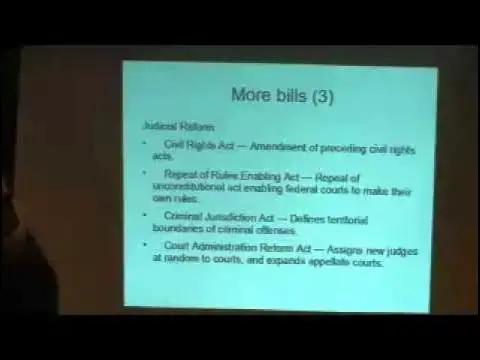
Lecture by Jon Roland at meeting of American Constitutionalists at Silverado Smokehouse, Corpus Christi, Texas, March 6, 2012. Proposed bills at http://jonroland.net/proposed_bills Click on http://jonroland.net/ppt/action_plan.ppt for the PPT file used in this talk.
Show More Show Less View Video Transcript
0:00
US Senate for the upcoming 2012 election thank you Mr R thank you for having me this
0:06
[Applause] evening what I'm going to be talking to
0:11
you about this evening is essentially action plans a lot of people will talk to you
0:18
about uh trying to understand the Constitution what it requires what it
0:27
permits what it forbids how it is that we're supposed to interpret it and it's very important
0:34
that we do encourage understanding of the Constitution and what it requires of us
0:42
but uh we need to be putting more of a focus on what we can actually
0:49
do and this is a campaign season it's time to be discussing
0:55
Solutions so I'm going to briefly go over let's say the overview of this and
1:02
then start getting into some specifics so first of all you know they
1:07
always say you're trying to achieve something imagine
1:12
success try to see what success would look like so you know where you need to
1:19
go well there are three main elements of what success would look
1:24
like first of all minimal threats to our rights
1:31
if we the ideal situation is one where we don't have any threats to have to
1:36
defend against where we're not constantly having to look over our shoulder at to see who's coming we're
1:43
not worried about uh you know the the Tiger in the in the brush about to
1:49
pounce on us but if there are violations of Rights
1:55
we need to have remedies that are accessible told saying is that there is
2:01
no right without a remedy and in fact we have not lost any
2:08
of our rights we haven't even in principle lost any of our remedies what has happened in the last
2:15
200 years is that the remedies have been putting being are being put increasingly
2:22
Out Of Reach as a practical matter and make it too expensive too difficult too
2:28
uncertain so that we now live in a country where most small
2:36
injustices don't get wred at all it just doesn't pay for anyone to try to seek
2:43
Justice for let's say injuries of less than a few
2:49
thousand and uh there was a a time when that wasn't true any little Injustice
2:56
there would be some Court some s you know system IC way to try to achieve
3:02
Justice now uh the the anti has been
3:07
raised so high with lawyers on both sides of every issue that it can take
3:14
hundreds of thousands or even millions of dollars to get Justice even for a you
3:20
know $1,000 issue so it's uh we have a situation
3:26
where Injustice is uh
3:31
eroding it's like termites eating the house it's eating the house from the
3:38
inside because all those little bites that don't get corrected sooner or later
3:45
bring the house down so the third item which is not strictly
3:54
speaking constitutional in character is no depression war or
4:00
avoidable disasters as we seen most of the departures from
4:07
constitutional compliance most of the threats to our rights have occurred
4:12
during time of war or depression and we're facing a big one
4:19
now there's some question as whether it's even avoidable at this point my own assessment is that it is if
4:28
we did everything exactly right right but the odds of that happening are not very
4:34
good because right now uh the
4:40
elites those now in the holding the Reigns of power do not know what they're
4:46
doing they have hired the experts and the experts don't know okay well the people don't know
4:54
either you know the te party activists you know even things like the Occupy
5:01
people you know they're all generally aware there's something wrong and they're generally calling for somebody
5:07
to do something and mostly they don't know what to do and the people they're being a that
5:14
they're asking to do something mostly don't know what to do either uh the last couple of years is
5:20
this has been particularly brought out both at the state level and the federal level is I have dealt increasingly with
5:29
uh members of Congress members of the legislature you know people in all walks
5:35
of government the media they just are
5:40
overwhelmed and when they do try to come up with a proposal it's usually something that's lame that will never
5:48
work that's just designed to appeal to people but that has no chance whatsoever
5:56
of improving the situation and unfortunately too many people blim on to those things say oh my
6:03
goodness the solution balanced budget amendment
6:09
wonderful oh fair tax oh great no they're
6:16
not those simple direct obvious Solutions are almost certainly bad
6:24
ideas now later on this evening I'm going to be presenting you what I hope are good ideas at least they seem to
6:32
everyone that I've had look at them to be better than what anybody else is doing now I don't claim to have all the
6:40
answers you know no human being does but at least they will hopefully
6:46
look a little bit like what we need and if we can start with things like that but maybe we can build on them
6:54
we can get other people's ideas one of the things I hope to do here tonight is for you to look at very
7:00
critically and try to see if you see any flaws or if you if I've left anything
7:05
out this be an excellent chance for you to contribute to the process don't feel
7:12
that just because you're not an expert at drafting legislation that you can't contribute
7:18
you may not know how to draft it yourself but you may be able to spot something it's just like uh lay people
7:26
having lawyers draft contracts for them well the lawyers think they know what
7:31
the their clients want but the chances are very good that if you're an
7:37
intelligent client you'll be able to look at what their work what they have done and say wait a minute you didn't
7:45
understand that you don't understand what we were what we verbally agreed to
7:50
or you haven't thought about this or haven't thought about that or that doesn't really do what we wanted to
7:57
do so you never want to turn things over to the experts without monitoring what
8:03
they're doing very very carefully because anybody can Overlook
8:12
something now here are some of the elements of what we want first well obviously we need better
8:22
officials uh now there are two ways of getting better officials you can improve
8:27
the ones you've got or you can replace them we'll be getting into that but we also need better
8:34
citizens we got into this mess because citizens either acquiesced or demanded
8:42
that our political leaders do what they in fact are doing and either through incompetence on
8:50
the part of the officials or the people or whatever in attention to what they their duties as Citizens uh we're in the
8:58
mess we're in today so we can't just blame those in power we
9:04
all sharing the responsibility now third we need better
9:10
laws uh perhaps even amendments to the Constitution to clarify some of the
9:16
points at which people seem to be confused they seem clear enough to the founders and it does to me as someone
9:24
who's read the legal English of 1787 but people don't use that language
9:31
anymore people coming up coming of age in 2012 America you know it's an alien
9:39
language to them it might as well be Greek or or any other such foreign
9:46
language okay we need better Court decisions most of the things that we
9:53
object to that government is doing are based upon Court decisions that occurred at one point or another
10:00
now they may not started as Court decisions you usually started as some kind of legislative or executive action
10:09
but at some point they probably made it to a court and the court ratified it
10:14
Court sustain the position of a government against usually some the
10:20
right of some individual and all of a sudden they started building everything on that you realize that most federal
10:28
criminal laws are based upon one Court decision the 1942 case of wicker B
10:36
filberg where a guy named uh
10:42
filburn Rosco filburn was prosecuted criminally for eating his own corn which
10:48
was subject to W to production and price controls by sustaining that
10:55
conviction it created a precedent that now all of our drug laws all of our gun
11:00
laws you know most of the Federal Criminal statutes on the books today if were
11:08
asked to justify themselves and laws don't justify themselves those who try
11:13
to execute them dude but they look say oh Wick could be
11:18
filber it's all the authority we need was that the Commerce Clause that they nailed them for that's right although
11:26
more precisely the necessary in property laws so they don't argue anymore that
11:33
any of these things are Commerce that they say that we have to do this that or the other in order uh because it's
11:39
necessary and proper to regulate commerce in other words it's has a
11:45
substantial effect on Commerce well everything has a substantial effect on
11:51
Commerce okay so uh I have a all kinds of articles on this subject
11:59
um better execution of the laws you know when you have to worry
12:05
about uh some guys in black suits knocking
12:10
down your door at 2 in the morning shooting your dog and terrorizing you
12:16
and your family only because they have a mistaken street
12:22
address uh we have a problem so uh you know a lot of ways in
12:30
which the problems occur at the executive level then we need to have better
12:38
policies we have many many policies fiscal monetary uh regulatory all kinds of
12:45
policies which may have had good intentions on the part of their proponents but they just do not
12:53
work on our my website constitution.org I have an excellent article on sort of
13:00
why that does that happens human beings in general do not do a very good job of
13:08
understanding complicated systems and when they try to make
13:14
policies for complicated systems they more often than not get it
13:20
wrong human beings generally think in a simple linear way more of this makes more of that more
13:28
of that makes less less of that you know but they don't think in terms of Loops
13:33
of feedback where more of something can cause less of that and more of that and
13:39
less of that and more of that and less of that and more that and before you know it you can't predict what the
13:46
system how the system is going to behave gun control laws excellent
13:51
example of proponents of gun control of a simplistic model that all you have to do is to make guns harder to get and
14:00
somehow you will reduce the availability of guns to criminals in fact it does exactly the
14:08
opposite because they haven't figured the chain of causality that leads to an
14:16
increased Demand on the part of criminals because now they have more opportunities to use Firearms
14:24
illegally and fewer and lesser risk of being having a citizen encounter
14:31
them okay and finally one that doesn't often come up in constitutional
14:38
discussions there is actually an important role for better Technologies we course got hear a lot
14:46
about Technologies of of the surveillance State the ways the
14:51
technology can be used against this it can also be used to help us the internet
14:58
itself is probably a most outstanding example of that few things in human history have
15:05
done more to promote Liberty than the internet and now that there are efforts
15:12
made being made to suppress it we need things like mesh networks in case you haven't heard that
15:20
concept before a mesh network is people taking a bunch of devices could be cell
15:28
phones laptops whatever and they connect to one another
15:34
directly passing information from one to another to another and as long as
15:39
there's a chain between any two of them they can function like an internet between
15:46
them this is being pushed now in fact our own State Department is funding it
15:52
in uh uh other countries to uh enable people to uh oppose their dictatorship
16:00
governments but of course the same technology can be used by US too and can
16:05
be we're using it's working very well in the in the combat zones now military is
16:12
using it and we're about to have it available to us you know as ordinary
16:18
consumer goods John is that something we can get more information on as far as how to
16:25
establish that within a group on my website okay oh great thank you almost everything I mentioned is either
16:32
on or linked from my website when and doubt to go to constitution.org and
16:37
browse around eventually you'll probably find it and if it's not I'll add
16:43
it okay better officials can existing
16:48
officials reform well maybe a few of them uh we've seen a little bit of
16:55
progress in that lately but uh uh there are limits especially after
17:02
they've been in office for a while they tend to get set in their ways like anybody else uh they keep trying to do
17:09
the same thing over and over again because it worked or didn't work before you know that what that
17:17
means but the problem we have a problem of where are The
17:23
Replacements I probably personally know most of the legal scholars in the
17:29
country who I would consider expert on the Constitution there are less than 200 of
17:37
them Obama
17:43
uh most of them are not in government some are in the academic world but in
17:50
general uh if we had to replace all the judges we would not be able to find
17:56
enough constitutionalists to man all the judicial positions never
18:03
mind you know me uh members of Congress or the executive branch and of course
18:10
all the levels of government we do not have a deep bench to use the sports
18:18
metaphor uh we have a few people on the field who are doing really badly and
18:24
there's nobody there to replace them with that's are very few
18:29
most of those are out of shape so uh we're going to have to
18:34
cultivate a new generation of qualified
18:40
Replacements and then what are we doing to develop fine and support Replacements well that comes back to us well we're
18:47
not doing a very good job on our Public Schools I've been active at trying to
18:52
improve that situation and I can tell you it's a real Challenge and what I pretty well come to
18:59
the conclusion is that we're going to have to require that kids learn in public school
19:09
the equivalent of the first year of law school you simply cannot survive in this
19:15
society today unless you can do the things the lawyer do does you have to know how to serve on a
19:22
jury or a grand jury you have to know how to do legal research and writing you
19:27
have to know how to file a case how to go to court and prosecute it how to appeal it you need to know how to do all
19:34
those kind of things you can't depend on lawyers to do it because if you do you're going to
19:40
lose your rights so
19:46
uh fourth point is you can't replace anyone
19:51
without winning elections uh you can talk all you want about getting somebody to Appo Point
19:59
somebody different to an appointed position but you that just takes you
20:04
back to the problem of the guy who's doing the appointing at some point you got to
20:09
elect somebody and that means you've got to win elections and you can't do that if the
20:15
votes aren't being counted accurately so you need to attend to making sure that the ballots are
20:23
accurately counted so that means that in any election you possibly can be a pool
20:30
Watcher be an election judge be right on hand to watch it being done to make sure
20:36
it's done right and one other little tidbit it's not against the law to steal
20:41
a primary what only a general election I discovered that a few years
20:48
ago when it appears that my primary win was stolen from me for US
20:55
Congress uh Replacements need to know what to
21:01
do most of them don't and they don't get the kind of education that could prepare
21:07
them if you look at some of the uh gffs being made by candidates for public
21:13
office today I don't need to go into the details you would know who they are uh they're just not very well
21:21
prepared that doesn't mean that they're uh stupid people although they may be
21:30
uh but when I was in Washington DC I spent a couple of years there you know
21:36
mingling with the people who run the country what I discovered is that the
21:42
halls of Power are mainly occupied by SE students who know how to make
21:49
connections I was regarded with deep suspicion because I was too smart for
21:56
their taste they felt they couldn't control me it
22:02
got to where they would be kind of their hackles would go up when I walk in would walk in a room but they couldn't do
22:09
without me because I was the only one who KN knew how to get a lot of stuff done but they wanted people working for
22:15
them that they could control and you don't get the best qualified people that
22:22
way over and over again I saw the pattern that the best qualified people
22:27
in this country do not make it into the halls of
22:33
power okay lot a lot of the ones who do might have made good grades they may be studious and diligent
22:41
but they are studious and diligent and
22:48
shallow I mean I I I'll never forget in just a few weeks ago when Ben Bernan in
22:55
a public appearance got it wrong on what inflation is is but he's supposed to be the
23:02
expert all right I mean occasional Miss
23:08
speaking is you know forgivable but he did it in a way that indicate you really
23:13
doesn't know what what inflation is now you know what are they what are
23:18
they drinking in the water there I mean we the kids I went to high school with
23:26
could explained it better than that so I don't know what's going on but it's
23:32
not it's not good okay even if we can tell them what they
23:38
need to do we need to make sure that they do it you cannot just put people in office
23:45
and then forget about them you got to watch them and nag them and needle them
23:51
you got in general you have to supervise them same as you would with a doctor or
23:57
a lawyer or an accountant or anybody else who works for
24:03
you um people need to know what is and is not constitutional and what the
24:09
Constitution requires of us uh I have had too many discussions
24:16
with Tea Party activists who say oh we've got to cut federal spending but no
24:21
no we can't touch Medicare or Medicaid or Social Security um sorry those things are
24:29
unconstitutional and they're bad ideas yes if we do it away with them it
24:35
would be hard on a lot of people but the simple fact is we can't afford it they're not sustainable
24:42
they're not going to be sustained and we might just as well buckle down and face
24:48
the fact that we're going to have to give up a lot of things that a lot of people
24:53
want and you know being able to take Bad Medicine
24:59
that is to say not medicine that's bad but but good for good for you but bad
25:05
tasting is part of what people need to do when they grow grow from being
25:10
children to being adults and what we really need in this country and this world are
25:18
adults and I don't see as many adults as I did when I was
25:25
younger I grew up at a time when my parents generation came out of
25:31
depression and they went through hell and it seared them often in ways that
25:37
were not particularly good for them or for the country but at least they took things
25:44
very very seriously and were they were willing to work their asses off when there was a
25:50
matter of public concern uh following World War
25:56
II we entered perod of prosperity and I hear a lot of social
26:03
conservatives in particular trying to blame uh the instability of marriage
26:09
High rate of divorce of uh unwed motherhood and all that on this that or
26:16
the other social Factor well I'm sorry but the main two factors are affluence
26:22
and television okay
26:28
most human beings are not designed by nature to thrive in a state of
26:36
affluence most human beings need a certain amount of hardship or they're not going to shape
26:42
up just like in boot camp when we were trying to train young troops um most of them came out of
26:50
fairly comfortable uh homes they didn't never have they never starved you know
26:56
there's always you know food on the table roof over their heads and all of a sudden things got real hard especially
27:04
if they went across and had somebody shooting at them
27:11
uh so uh there are people who do thrive in a
27:18
state of affluence those are the lucky ones most people are not are not like that and when you add
27:25
television I'll never forget it almost happened overnight in 1952 I my hometown
27:33
of sige we went from a situation where on typical evening people were walking
27:40
around the streets visiting one another we had porches people sat on their porches and rocking chairs and you know
27:47
said hi and talked about the Affairs of the day and all that that was our entertainment then all of a sudden
27:55
1952 the antenna started Popp up on the roofs you can see this bluish glow from
28:01
inside the living rooms and everybody left the streets and went into their
28:08
houses and I saw that again in pela Mexico and a few other places where I
28:15
was there before and after television okay now I'm not saying television we can't we can do away with
28:22
television but we need to understand what is causing our problems
28:28
and it's things like that that often do it another one is the way we to educate
28:35
people uh my grandfather taught school initially in the era of the one room
28:42
Schoolhouse he used What's called the lancasterian system he teach the more advanced students and have them teach
28:48
the less lesser Advanced students and those would teach the those lesser advanced than those and so forth so it
28:55
was a pyramid of learning everybody learned everybody
29:00
taught then he went into the modern system with kids organized by age into
29:07
classes using the lecture method and I asked him once what he
29:12
thought about the transition and he said he did he didn't think it was a good idea because the kids would become too
29:19
much under the influence of other kids their own age and you'd wind up with he didn't use
29:26
that word but phrase but what he said essentially is we're going to become a nation of
29:33
adolescence so sometimes reforms that seemed like they were good ideas and
29:39
that reform was instituted in theory to enable more kids to be to be
29:47
educated well in fact the lancasterian system worked better to educate more
29:52
kids it was also more efficient but uh it didn't create as many jobs for teachers
30:00
so there are extraneous factors that can have dilar effects and that are often
30:07
not recognized until decades or Generations after the
30:13
fact um so people need to be able to look at
30:21
almost anything that's done and immediately decide that is constitutional or that is
30:26
unconstitutional or at least if I don't know that it's constitutional I need to
30:32
get to work and look it up figure it out and I've set it as a personal goal to be
30:39
able in almost any legal question that comes before me to be able to decide the
30:45
constitutionality of it within seconds and I can generally do that I
30:50
very s of encounter a legal question anymore that I can't decide quickly but that took decades and DEC of
30:59
effort most lawyers can't do
31:05
um people need to intelligently elect officials that means not voting your
31:11
pocketbook if you feel a tendency to say oh I'm going to vote for that guy because he's going to get me some tax
31:18
break or some benefit or he's going to uh feel my pain or uh he shares my
31:26
values going pay my mortgage give me a break you're hir you're hiring a guy to
31:34
perform a highly technical job think about how you would hire a law
31:40
a doctor or a lawyer or you know an engineer somebody who's needs to
31:46
exercise Advanced professional skills right you can't put somebody like
31:53
me into public office and expect them to know what's what's they're going to do
32:00
uh because most Ordinary People don't know what to do if you put somebody in there that's just like you he won't know
32:07
what to do either that doesn't mean you hire experts because the experts may not be
32:13
expert either trying to find the few people who really do know what's going on and what
32:20
to do is a real challenge you know with this economic crisis a few of the ones who know
32:28
something about the economy are are emerging there not people who are in
32:33
government there are few who are in the academic world but most of them were on the outskirts on the fringes you know
32:41
trying to say hey hey there's a trouble coming pay attention we're all going to
32:47
die or something like that well nobody paid an attention till now when
32:53
everybody else is everything else is falling apart and suddenly you know maybe he they had
32:59
something but well let's see what can we do about it well let's just dust off their proposal and apply it and too late
33:07
for that now well so we also need to avoid misguided
33:16
proposals there are a lot of them out there so-call what I call them Pat
33:23
myths uh per uh pushed by myth monger
33:29
you there's no shortage of charlatans and snake oil salesmen with quick easy
33:35
simple direct obvious solutions to our problems you got to be
33:42
skeptical uh there are no easy guidelines for picking out the
33:50
wheat from the CHF but you should at least have some sense that if it seems
33:56
too appealing probably is a bad
34:04
idea now on the subject of laws which is what I'm be getting into this
34:13
evening on my website I have a bunch of proposed bills these are bills which I say that I
34:20
will introduce in the Senate if I'm elected if you go to the other candidate
34:27
at its websites you won't find anything like
34:32
that you will not find draft legislation ready to drop in the
34:39
hopper and you have to ask yourself well why is that is it that they just don't know how no a lot of them are already
34:46
are incumbents if they know how to draft legislation they could put it on their website but they are advised by the
34:54
political Consultants don't put actual bills on your website because it'll just
34:59
confuse the voters they'll start picking away at your bills and if they find anything in
35:05
them they don't like they'll vote against you you know without weighing the pros and cons of the whole
35:14
package okay well I can you know certainly appreciate that kind of advice
35:19
but I can't do is take it because I cannot seek public office
35:26
on the premise that the voters are incompetent I have to operate on the
35:33
basis that they are intelligent that they're conscientious that they want to do the right thing and they only need a
35:39
little bit of information and if that's the case and I certainly hope it is that I'm going to
35:45
provide it and my proposed bills are not just for me if I get elected you don't need
35:53
to feel well I don't need to study this stuff because Roland's not going to get elected anyway way well but they are there to be used
36:02
not just for my campaign but for anybody's campaign they are ready for you to
36:09
download print out and put in an envelope and send to the candidates for
36:15
federal office because of course they're designed for federal use uh and you can say hey I just found
36:23
this on the internet it looks like a good idea uh why don't you
36:29
supported now if they just get one letter like that they're not going to pay any pension probably not even 20 or
36:35
30 letters but if they got 200 letters they might begin to pay
36:40
attention and eventually if they got 2,000 or you know 20,000 they'd pay a
36:47
lot of attention it would start working its way into their own campaigns then it become part of the
36:54
debate of the debate where they would be trying to outdo each other on how well they can
37:01
solve this problem with the specific language of this language or that
37:06
language instead of just popping off at each other about you know oh you're not
37:12
consistent you're not a true conservative you're not this you're not that
37:17
hey the time has come to get down to how would we draft things how would we carry
37:25
them out down to specifics
37:31
now my proposals are admittedly bold some say too bold uh well I found that if you
37:40
introduce a compromise from the beginning you generally don't even get
37:46
that you introduce a pure proposal and if others want to compromise let them
37:51
propose compromises
37:58
okay now here's where I just get down into a list of some of the ones on my website I've got plenty more plann and
38:06
I'm having to we the advantages and disadvantages of putting too many on and
38:12
having the more important ones being getting lost in the among the less important ones or just picking a few of
38:19
the most important as I've done so far uh the the serve is kind of a
38:25
sample so right now it's in the sample State well you notice the first one I
38:31
lead up here with is Firearms infringement Reform Act and I'm going to show you the bill
38:37
itself in a few minutes it's not an accident that is the first
38:43
one now part of the reason for that is that there are a lot of people for whom
38:49
that's a key issue but it's also a excellent example of how to solve
38:58
this kind of problem legislatively is so can serve as a model
39:03
for drafting other kinds of legislation on other subjects I also have three bills for
39:10
amendments to the Constitution and there are a lot of
39:16
amendments in my proposal uh it would more than triple the length of the Constitution if they
39:22
were all adopted but if you look at one at a
39:28
time it's pretty hard to argue that each one of them is not needed at least some
39:34
variant on it they address Point points if you go through the the bad Court
39:40
precedence and the bad legislation and every all the bad stuff that's been happening for 200 years you find that
39:46
I'm addressing each one of those and sometimes the only way you can
39:52
undo 200 years of bad precedence is to deduct an amendment
39:59
so I have three three groups clarifying amendments don't change
40:04
anything all they do is clarify ambiguities the second group are
40:09
remedial those are things that the bounders overlooked uh we've been kind of
40:15
glossing over them ever since but uh they really we really need to spell it out the third or the substantive
40:22
amendments those actually make changes but generally there are changes that are consisted consistent with the
40:28
overall the original design they're just uh filling in gaps and uh attending to
40:36
certain things that prove not to work very well
40:44
okay three key areas that go together
40:49
legal tender tax reform and spending reform I made them separate bills but
40:55
they really do form uh Triad um this is what would address the
41:03
whole problem of fiat currency of the Federal Reserve of the income tax of of
41:10
unbalanced budgets the key elements that are needed are right in
41:16
those three bills and you know if you designed it properly they're not that
41:23
complicated uh but you have to under the there's some subtleties involved that
41:29
you need to understand in order to to to do
41:34
that of course the repeal of the patient protection and Affordable Care Act that's an easy one except that you
41:43
really do need to do something else on medical care because it has already done
41:49
so much damage and now we have the problem of undoing the damage it did
41:54
while I was in active so when you're reforming something it's not usually just a matter
42:01
of repealing something if something has been en forced for a while it has
42:06
created a an environment which you now have to go in and
42:13
fix and so you have to design a stepbystep transition out of the mess
42:20
that you're in an example of that is the sarb Oxley Act
42:27
was supposedly reform uh it made things worse and
42:36
uh now this first one is interesting some might say Civil Rights
42:42
Act well what is that all about well I'm borrowing the same name that's been used
42:49
for other acts these other acts focused on a
42:54
few abuses against minorities women and so
42:59
forth and what I'm doing here is I'm extending it to all of the rights that
43:06
we can identify and for the first time ever I don't just lump you know say and
43:15
all of the rights the way the Ninth Amendment does I go into the Ninth Amendment and everything else and I list
43:23
as many as I can I still say and all others but now I'm making some of them explicit
43:30
the judge can't hide behind saying well I don't find that right in the
43:36
Constitution or the legislation so I'm just not going to recognize that as a
43:41
right now I've spelled it out and it's a long list but it doesn't leave any W any
43:48
wiggle room rules enabling act allows the
43:54
judges to write their own rules and I'm removing that prerogative from
44:00
the the criminal jurisdiction act says that okay you can have uh Federal
44:07
Criminal statutes except for one Minor Detail uh these only apply to small
44:14
territories like the District of Colombia none of the rest of this applies to State territory and oh yeah
44:22
by the way these don't even apply to the district of Colombia so yeah you got all these acts on the
44:29
book and let's see uh well after you subtract the territories where they don't
44:34
apply there well is there anything left no maybe
44:39
not so uh that's one of the ways that uh in the
44:45
court administration Reform Act I have designed this reform where
44:52
judges are no longer to be appointed to specific Jud additional positions that'
44:58
be appointed to a general pool and then ass signed from there at random that would include even the Supreme
45:06
Court so one big pool random selection serve for two years and then another one
45:14
replaces them so that would be hopefully depoliticized the court to some
45:22
degree now uh def reform well Force National
45:27
Defense authorization act we already know that's an easy one except that there are a few of the things that are
45:33
not included in HR 3785 that need to be attended to because
45:39
it's not enough just to remove remove that provision
45:45
uh then administrative cedal Reform Act essentially says that
45:52
uh administrators have to have the burden of proof
45:58
courts may not defer to administrative findings and by the way regulations
46:04
don't apply to individuals private individuals they only apply to government employees and
46:12
contractors so here's where we get into one such act
46:20
as serves as kind of a model now there's more that went before this and we'll go after it but I just
46:26
lift out a couple of sections here first of
46:31
all when you repeal something you got a list what you're appealing you need to go into the public
46:39
laws the statute at large United State's code and so forth and spell it out
46:46
exactly what it is you're appealing or
46:52
amending now
46:57
this gets into state infringements it says well now wait a minute how can a federal statute get
47:05
into State infringements well remember what I said about the Civil Rights act the way the Civil Rights Act works
47:12
is it creates a cause of action that enables a private citizen to sue his
47:18
state if the state if State actor infringes his rights and what that bill does as you
47:25
get into it later and this specifically for this one is that if a state
47:33
agent infringes your right to keep in their arms you can go to federal court
47:38
and sue him and those under the statute that's a civil rights
47:43
violation and what I introduce that's a little bit
47:49
unusual I put a floor on the relief that can be sought see a lot of the kind of
47:56
relief that would be involved here is not damages with monetary value so ordinarily that would not
48:04
interest a low a lawyer uh to take a pro Bona couldn't afford to do
48:10
it but what this is saying is that even if you don't seek monetary damages you
48:17
can get your attorney's fees and court costs and we put a floor on it if you Prevail you get the equivalent of one
48:26
terab energy which at current prices works out to about
48:31
$23,000 it could be another amount but it's saying that okay here's $23,000 to
48:39
any lawyer who can defend a citizen of against us an abuse of his right to keep
48:46
him be Arms by state act now e even if he couldn't afford to
48:52
take the case for one guy he may be able to find 20 guys similarly abused all of
49:00
a sudden he gets 23,000 for each one and it sudden gets becomes worth this
49:06
while so this is the way that you reach down to the state and local level in
49:12
order to deal with infringements of Rights and I can tell you this is
49:17
designed and I think it would probably work would pretty well Wipe Out All State gun control laws throughout the
49:24
country overnight without doing anything
49:30
unconstitutional just creating a jurisdiction under article
49:36
three now remember what I said about
49:41
transitions the gun control laws have been on the books for a long time we got to figure out what are we
49:48
going to do about all the cases that have already occurred under them well
49:53
first of all it provides for setting aside convictions it provides for compensation for
50:00
wrongful conviction and it provides an exception
50:05
or a disability removal uh if a there was a lawful
50:12
hearing which found that somebody was mentally incompetent and therefore couldn't be
50:19
trusted to care keeping their arms and he was arrested not by the feds they wouldn't
50:25
have jurisdiction but by state then it would provide a defense that yes he was
50:31
lawfully deprived because he was mentally incompetent but takes a jury to decide
50:41
that so unanimous verdict of a jury of
50:48
12 so you can't just go around holding competency hearings and saying all these
50:55
guys are you know know mentally incompetent let's take away their guns
51:01
or put them in a nursing home or take away their property or anything else you
51:06
might want to think to do this is a there are other places where this pop
51:12
this kind of REM pops up but the Practical effective is you can't do any of those things without
51:19
jury now legal tender Reform Act now here's an example where and I
51:27
did it in the others two but I try to follow the rule that in every bill I cite the Authority for
51:35
it constitutional Authority now we get into
51:42
what acts we are reforming
51:48
and in this case we're amending the coinage Act of
51:54
1965 and we're saying that it's will apply only within non-state territory of the United
52:00
States in other words the the District of Columbia the military basis and so
52:06
forth and on such non-state territory no coin currency or note shall be legal
52:11
tender that is not convertible to a number of megga of energy fixed by
52:18
Statute now what is that saying uh it's saying in effect yeah you you
52:26
you states are supposed to use gold and silver as legal
52:31
tender but Congress can set the
52:37
value of such things and you it doesn't necessarily have to just be value in
52:44
terms of weight imp Purity it can be value in terms of how how
52:49
many uh gigles of energy you can get with it so by
52:57
pinning the value of everything even gold and silver to the energy equivalent
53:02
which doesn't change much the economy can rise or fall but the real cost of energy remains pretty
53:12
steady the steadier than anything else we've got then that provides a
53:19
foundation and pretty well excludes inflating the
53:24
currency as long as it's tied to the value of
53:31
energy now we get into tax reform
53:39
well this is doing a variety of things but the essence of it is that is doing
53:45
away with the income tax on compensation for labor
53:51
y now it doesn't necessarily do away with all kinds of taxes that the IRS
53:58
collects but it certainly transforms them and one of the things that he
54:05
does is it substitutes a Purchase Tax now this is a
54:13
uh unfamiliar notion to a lot of people a Purchase Tax is not a sales
54:20
tax it is pay it is based upon the purchase of something not the sale of it
54:28
and it only applies to things that are purchased for
54:33
resale so if you uh buy something for your personal consumption there's no tax
54:40
due on it you're not selling it you never have to pay a tax on
54:46
it so what the effect of it is that it applies to businesses who buy stuff to
54:51
make other stuff and that of course if eventually
54:56
would find its way into the cost of goods and services um that makes it all indirect
55:05
tax taxation so far as individuals are
55:13
concerned now I add two other things which are
55:20
probably a little bit controversial in some quarters they intended to be this
55:25
first one puts a pro
55:31
a tax that on sliding scale based upon how
55:37
long you hold something you bought for resale generally speaking for financial
55:47
instruments we're not concerned with goods and services just things like notes and you know bonds and stuff like
55:55
that these are the ones that are giving us trouble and what it's saying is if you
56:01
hold it for 30 years there's no tax on it if you hold it for less than one
56:06
years is a 30% tax on it and of course sliding scale in
56:12
between the idea is to provide an Financial incentive to invest for the long
56:21
term and that would probably do more than anything else to improve our
56:28
financial markets because right now they're mostly Investing For A short-term
56:34
turnover and it's that kind of short-term fluctuation that can have highly
56:40
undesirable consequences now it doesn't forbid short-term trading you can still do it
56:48
but you pay a tax if you do it's intended to weigh the benefits the cost
56:54
and benefits in the dire direction of investing for the long term similarly item
57:02
six there's a s tax on large
57:08
organizations for example a really large banking chain might have to pay an extra tax on
57:14
its transactions if it's buy if it's buys any notes or whatever
57:22
bonds but it wouldn't apply to a small one the idea being to again to change the in
57:30
incentive structure so that it encourages large organizations to break
57:37
up into small ones that doesn't cut into the value of
57:44
the in equity on the part of the shareholders they just have shares
57:50
thereafter in more than one company but it's intended to separate the management
57:56
so that uh they are not uh making decisions in one place that can have
58:03
disastrous effects on the whole country the entire world
58:08
economy um Milton Freedman once said he famously I am in favor of a free market
58:15
but not of large organizations and this essentially goes to that
58:21
point there are a few other Provisions here but uh let me move on here here's
58:29
where I get on that solar RAC Dimension
58:34
okay here are the things that are
58:42
amended and what this is essentially
58:48
doing there are two titles that are affected by this Title 18
58:56
section 241 and 242 are criminal statutes title 42 1983 and following are
59:05
civil remedies most of this is about civil remedies but as it stands now on
59:12
the books there are no penalties civil or criminal for federal agents to
59:19
violate our rights only state actors the 14th amendment was only designed for
59:25
State actors they never actually got around to covering federal
59:32
agents now as it turns out there is a foundation in the Constitution for
59:38
making Federal actors liable and uh there's a provision of the
59:45
Constitution I go into all that which provides that
59:51
Authority and based upon that Authority I extend the same same rules to both
59:58
federal and state actors
1:00:04
now I again provide for a floor on compensation for attorney fees and court
1:00:11
caus so there's a sufficient incentive to get the lawyers
1:00:16
interested and by the way one of the things you have to do when you design legislation is make sure that there's
1:00:23
always a way for somebody to make money at it okay it's not going to work if nobody
1:00:30
can make money at it they're just not going to do it so
1:00:37
if what you ultimately have to do all it seems you know you want to want to bite
1:00:42
your tongue when to propose it is you have to provide the lawyers with a way to make money enforcing people's
1:00:49
rights because frankly most of them can't afford to do it if they can't make money at it they go out of business
1:00:55
themselves El so I get into the first I I organize the
1:01:04
rights into sections first under due process General um and I just list them out here
1:01:13
whole bunch you might want to go through you might find some I overlooked uh i' I've been fairly
1:01:20
thorough here we get into criminal trials doe process with that this
1:01:26
includes all the familiar ones you're have probably already familiar with but
1:01:32
uh there are a few others that are been overlooked in some many
1:01:37
cases here we get into civil trials and appeals then we get into another kind of
1:01:45
Rights non Authority there a general right not to
1:01:50
have government do things for which it doesn't have the authority to do you would think well the ninth and 10th
1:01:57
Amendment or say that but uh they do it in rather vague
1:02:03
general terms and here what I'm doing is spelling it out provide structures and procedures
1:02:12
for actually enabling people to just get the
1:02:17
remedies and again we get into more there now we get into another section
1:02:23
super wres to supervis government actors you have to have the means to be
1:02:29
able to supervise your public service you need to have to be able to observe them to record them they get to
1:02:36
R the records of proceedings uh all the financial
1:02:41
records uh and access to information about oneself right now there is are statutes
1:02:49
on this subject the Freedom of Information Act for example but it's not entrenched as a right
1:02:56
what this does is it doesn't just provide somebody with a administrative
1:03:03
remedy it provides a Judicial jurisdiction whereby you can go to court
1:03:09
to sue under this and if you get a presedent then it becomes entrenched as
1:03:14
a Judicial president now all of a sudden you're really getting
1:03:24
somewhere now we have final section of other that deals with things like Jens
1:03:30
ship uh traval rights and so forth that
1:03:35
uh don't fit naturally in under the other
1:03:42
categories here as we get into things like right of custody of children and uh
1:03:48
elderly par parents and all that sort of thing and of course the final one the
1:03:55
for going list is not exhaustive and further rights privileges and immunities
1:04:00
are to be found in the historical record rule of expressio unus exclusio alter
1:04:08
shall not be applied which exactly what they've been
1:04:13
doing and finally the end so U that's a good pausing point and
1:04:21
maybe a good chance for you to ask any questions John quick question question about what we just did what is the rule
1:04:29
of expressio un s to excluse your all terorist okay that's the rule that
1:04:37
um James Madison was so concerned about and others in proposing the Bill of
1:04:44
Rights uh the old comment law rule is that if you list
1:04:49
something uh it can be interpreted as excluding things not
1:04:54
listed so they were concerned that if they listed tried to list
1:04:59
rights that somebody could come behind them and say well you didn't list these
1:05:05
rights that right so this right is not in the list therefore people don't have
1:05:10
it so which is why they gave us the Ninth Amendment but what has happened with the ninth amendment is that judges
1:05:18
are not willing to go back to the historical record and find out what was
1:05:24
included in the Ninth Amendment in fact there is a historical record
1:05:29
what I did essentially here is go back over the historical record and dig it
1:05:34
all out I went into uh the writings of Edward
1:05:40
cook the great jurist that the founders look to I went to Blackstone I went to
1:05:46
braon and Britain and you know all these other guys and just went through it you
1:05:53
know chapter by chapter looking for all the rights I could find that need were mentioned anywhere and
1:06:02
including them in the list and I still have a catch roll at the end but I but I
1:06:08
also have so many items in the list that they no judge can say well that's not in the
1:06:14
list and if they respected all the rights that I've got listed our
1:06:20
situation would be enormously improved if I overlooked any they're probably not
1:06:27
too important but if I have I'll include them in the next
1:06:35
version you have any questions executive orders legal or
1:06:43
constitutional they are if they only apply to people under the president's
1:06:50
supervision I mean any head of a department can issue executive orders to those under his to his
1:06:58
subordinates and in theory that's all the president is doing the Practical
1:07:03
effect of it however is that they are published and people can
1:07:10
see them they can see what Federal Executive agents are being directed to
1:07:17
do and it has a practical effect of being directive upon them too because
1:07:23
now they say oops I have to change my Behavior to avoid having that Federal
1:07:28
administrator you know come down on me now in some cases they do actually
1:07:35
extend and have been extended to cover individuals uh more and more and what
1:07:43
one of the things that I proposed here would do away with that the um establishment of the various
1:07:50
Zars would you say that that's an attempt to give more bite to his
1:07:55
executive orders in other words establish U the appearance of authority by virtue of these individuals in charge
1:08:02
well most of the so-called Zars are only coordinators they're not really heads of
1:08:10
departments um that's an interesting method of management is
1:08:17
Arisen in part out of say modern methods where you pull together heads of various
1:08:24
departments under a chairperson who then is in he has a job of calling meetings
1:08:31
and coordinating them and supposedly they cooperate with one another uh for
1:08:36
the greater good of the of the company well that can work reasonably
1:08:42
well I mean we did that kind of thing in the in the Air Force when I was in the
1:08:47
service uh of course they worked in the Air Force because the air force was the Air
1:08:53
Force um he worked with the Army we had this kind of thing set up you know joint
1:08:59
commands you know I was our Air Force unit was on an army base and we had Navy
1:09:05
you know on the other side of the field and so there are a lot of occasions where we just we didn't have we're not
1:09:11
not in each other's chain of command but we needed to be able to cooperate so uh AAR by itself who has no
1:09:20
signatory Authority is not necessarily a bad thing and itself now the chances are I would
1:09:28
say most of those Zars are uh overlooking combinations of
1:09:34
agencies that are a problem in themselves but that's uh another issue
1:09:40
that's the problem is not so much at that level it's more at the level of the what
1:09:48
it is that the agencies are doing more directly um of course the classic
1:09:56
uh approach to this developed by this guy named Cass sunstein who is the Zar of Zars as it
1:10:04
were and I know Cass he's a nice guy he
1:10:10
do he calls his approach libertarian
1:10:17
paternalism which is an interesting no term he says well we don't have the
1:10:24
authority to actually tell anybody what to do but we'll just sort of adjust the
1:10:30
incentive structure so they'll want to do it anyway I mean where is the authority to
1:10:37
require anyone to show a social security number well in fact you won't find it in
1:10:44
his statute um they passed the Patriot Act
1:10:50
requiring Banks to identify their customers and then The Regulators came
1:10:57
up with a regulation that a social security number would be acceptable as
1:11:03
evidence of that identification without listing any other
1:11:10
identification okay so what did what did they do there they didn't actually say
1:11:16
people must present a social security number to open a bank account they just say
1:11:22
well the banks need to know who their customer are and yeah you there you can
1:11:29
choose your own way of identifying them but well if you don't want to get into
1:11:34
trouble uh you can use Social Security numbers so they all use Social Security
1:11:42
numbers um I'm fond of needling some of my lawyer friends with a little detail
1:11:50
that there is no constitutional authority to require anyone to present anything he's not required to have and
1:11:57
we're not even required to have a name there are lots of people in our
1:12:03
history that did not have names at least not legal names their parents just started calling
1:12:10
them something and their friends and neighbors call them something else and uh maybe somebody adopted a
1:12:18
name for himself that other people used to refer to him maybe he didn't maybe he
1:12:23
decided to change it you know every week but there's you don't own your name
1:12:31
your name is what other people call
1:12:38
you yeah that's right of course the
1:12:45
incentive there is you know in order to get the deduction so they're devising all kinds
1:12:52
of what incentives to get people to do things that they don't have the authority to order them to do well which
1:13:00
by another word could be considered compelling someone by almost by force
1:13:06
because in a way you're not allowing them access to their property let's say
1:13:11
a certain portion of their income perhaps a stretch but still where's the line between as Cass
1:13:18
sunstein would say nudging someone and compelling them by force yeah now of
1:13:23
course you realize that that again they don't spell it out but
1:13:29
if you read between the lines of what the law is really doing Federal Reserve
1:13:34
notes are owned by the Federal Reserve you don't own those Federal Reserve
1:13:40
notes youve borrowed them they let you use
1:13:46
them they what what you have is a right
1:13:52
to exchange them for other Federal Reserve notes
1:13:57
or silver or gold for now certainly not for gold or silver so
1:14:04
uh and yet there's a federal legal tender act that makes it legal federal
1:14:10
act making Federal Reserve now no legal tender which is
1:14:15
unconstitutional except on the territory of federal onpls which is what my bill
1:14:23
addresses NE to say if I actually got elected I'd have trouble getting anyone
1:14:30
to Second any of my bills much less sponsor them or push them to to the
1:14:37
Senate but maybe maybe ran Paul uh maybe one or two of the
1:14:45
others but the reality is that
1:14:51
uh there's there's very little that one guy like me could do if I got
1:14:58
elected I would really need to have 59 other Senators backing
1:15:05
me I would need to have at least half the members of the
1:15:11
house and uh even then it would be tough because the minority can do a lot
1:15:19
to put the kabash on anything that even a majority might want to do
1:15:26
yeah I wanted to been want to ask this I know it's kind not right but I wanted to
1:15:31
get your thoughts on you know there's a organization called Freedom 21 with
1:15:38
Henry lamb and he's promoting to um change the 17th amendment to have
1:15:48
the uh uh US senators appointed by state legislator like it used to be yeah
1:15:55
that's another example of an idea that is appealing but
1:16:01
unsound that's why I want to get thought yeah if you go to the history of the 17th Amendment and why it was adopted
1:16:10
you can see it was a reform measure that was popular by the time it was adopted
1:16:16
almost every state was already conducting popular elections and the state legislature just rubber stamped
1:16:22
the result of that popular election and if you look at some of the things
1:16:28
that led to that there there was a situation at the late 19th century when a big business
1:16:37
you know typically railroads or Banks or steel or oil or whatever could buy a US
1:16:45
senator for I think in I remember one case
1:16:50
$2,000 all you had to do is spread 2,000 bucks around to the right state
1:16:56
legislators and you got your the senator you wanted
1:17:01
so people got disgusted with that situation and it says well if we're
1:17:07
going to have corruption in the choice of US senators then at least let's make
1:17:14
the big money interest spend money persuading us to vote for the
1:17:20
guy which is the situation we've got now you we not going to get different kinds
1:17:28
of interests or policies if state
1:17:33
legislators elected Senators directly the argument that he's making
1:17:39
is that the states has more control over the representation at the
1:17:45
federal level yeah in principle they did in practice it did not work out that
1:17:51
way you have to look how these things things actually work in
1:17:56
practice the incentive structure was not there to divide the interest
1:18:03
between Congress and the states they were on the same side as
1:18:10
they are to this day if you ask the typical State Legislature how he feels about what
1:18:20
this the Senate ought to be doing just oh they ought to be sending us more money
1:18:26
that's it yeah they want the US Senate to do what
1:18:32
they're doing and if they had a choice they would elect people who were as bad
1:18:37
or
1:18:43
worse and they are and I'm G have a frog in my throat sorry about that guys and they already are well how how can we fix
1:18:52
the the election process now it seems like you know who's got the most money
1:18:57
wins well as a matter of fact if you go through my proposals you'll find
1:19:04
Solutions um essentially it changes the whole method of of of electing people to
1:19:12
public office using a system that more resembles how we select
1:19:18
juries in other words you don't have simple election where the voters are
1:19:23
influenced by who spends the most money you have a multi-step
1:19:30
process in which the intermediate steps are a random
1:19:35
selection so you keep narrowing the field of
1:19:41
candidates until you finally come up with one and that one cannot be selected by
1:19:50
spending a lot of money this method was carried to its
1:19:56
height in the ancient city state of Venice for 760 years they chose their
1:20:04
chief executive they call him ad Doge by this
1:20:13
method and uh they designed the of intent there
1:20:19
they had several powerful families they didn't want the chief executive
1:20:25
to be chosen or accountable or under the control of any one of those
1:20:33
families so they adopted a method that none of the big families could
1:20:40
control and for 760 years they really did get
1:20:46
good Public Service who were not beholden to
1:20:52
anybody was Venice the system didn't end until
1:20:59
Venice was conquered by an outside Invader it worked great for as long as
1:21:04
they were independent uh the ancient Greeks used a similar system too not as elaborate as
1:21:12
those of the venetians but he just goes to show that
1:21:17
there are alternatives to election and appointment both election and
1:21:23
appointment as we have set them up today are corruptible and
1:21:29
corrupted well the only thing that institution that we have that maintains
1:21:35
some Integrity is the selection of jurors in at least trial juries now in
1:21:42
grand juries we have a problem too because they're only selecting them
1:21:48
from among volunteers
1:22:13
my well but you have to always ask yourself do you want your faith decided
1:22:19
by a jury like that well that's what I'm saying that
1:22:27
they want to pick the most usable that they can do whether it's prosecutor or whether it's defense right now when I
1:22:35
grew up it was in a small town of 14,000 people my mother served on a jury about
1:22:42
once every three or four years almost every jury she sat on was
1:22:50
largely populated by people with previous jury experience so there was a continuity of experience
1:22:58
and understanding of the process um many many more cases were heard
1:23:05
before juries in those days even though there were many fewer cases you know
1:23:11
14,000 people there there's almost no crime and very few civil lawsuits I mean
1:23:18
I can actually remember a time when there were only two lawyers in town
1:23:25
you know all of a sudden their number increased and we got a lot more litigation
1:23:32
um so you talk too
1:23:51
about Watchers or whatever as long these
1:23:56
computer systems it is so easy to corrupt the cor
1:24:04
the computer system that in which case you need to have your own computer
1:24:10
experts going in and examining those machines they
1:24:17
callof well but you can still evaluate their their performance without getting
1:24:23
into the soft and
1:24:29
uh election thee say until this day you do it the right way on First Tuesday of
1:24:37
the month you just well ultimately it comes down to this that you need to be able to poll
1:24:44
your fellow citizens and they may be able to steal election by one or two or three points
1:24:52
becomes a little bit difficult when you got 70% on one side of an issue and they
1:24:57
call it you know 5149 in the other direction I think to something that will
1:25:04
do a photo scan of each ballot before go through the
1:25:09
scan yep there need to be some kind of paper trail
1:25:15
right we call it a voter verifiable paper trail
1:25:20
we yeah interestingly enough we do in a few couple of
1:25:26
counties this is decided at the county level in Texas oh it is which means you have the
1:25:32
ability to fix it in your county it may not be fixed anywhere else
1:25:38
but you can fix it in your own count example would go a
1:25:47
Way's a couple of us went up to the iaau years ago I was amazed you have all
1:25:54
these different prec meet in our gym they all for paper ballots and then everybody look over everybody else's
1:26:01
shoulders
1:26:09
and I don't know if this has ever been uh proposed before I mean we have the
1:26:14
technology where let's say you go in and vote and then you see your you know your
1:26:19
your print out you should be able to take like a serialized strip from that without name or anything but it ties you
1:26:26
know your your vote to you know a thing that that you have that you don't have
1:26:32
to share with anybody but later the vote should go on some system that's like a repository and then you could go in scan
1:26:39
the code the match it to your vote to see if it's still it's still the same I don't know
1:26:45
if that's but you need to be careful because it's too easy to deive such a system in a way that people can sell
1:26:51
their votes that's so you need to make sure that nobody can
1:26:57
go say okay this here is proof of how I voted pay me my
1:27:03
$50 I see okay I mean we already have that problem now but that would make it
1:27:08
even that would make it verifiable and probably more lucrative I imagine yeah well when I ran for when I
1:27:16
ran for congress in the 1974 uh the way you got votes was to
1:27:24
spread money around you went to the local bar you bought a round of drinks for everybody and you hired the the bar
1:27:32
denisons to put your signs up all over town and of course they would they would
1:27:38
vote for you and their buddies would vote for you and before you know it you had a you know had a
1:27:45
town same way with preachers of some Churches make a donation to the church
1:27:50
and all of a sudden the preacher delivers you his congregation so
1:27:58
uh that's the way politics was done in those days I don't recommend it but you
1:28:04
place any value on term limits for congress no not really why not you would
1:28:10
have to have term limits on all the staff as well that's true very true uh
1:28:16
bureaucrats the real power goes with those who do the work and I'll never forget the occasions
1:28:24
see I used to live on Capital Hill six blocks from the capital 211 6 Street
1:28:30
Southeast and only a block away was a night spot called the hawk and Dove it's
1:28:36
still there and On Any Given evening I could go over to Hawk and Dove so down at a
1:28:42
table with a with a beer and on the next table I would probably over over here Congressional
1:28:50
staffers talking to their handlers
1:28:56
and they were discussing what it was going to happen in be done in Congress and obviously in a way that
1:29:04
suggests clearly indicated that the staffer boss didn't have any knowledge
1:29:10
or consent over what was going on and what also
1:29:16
interesting is that in three out of four cases the handler was not a private
1:29:23
sector lobbyist it was a somebody from a government
1:29:29
agency the impression I got was mostly
1:29:35
CIA so when you if you hear me mention that uh uh David doers is former CIA
1:29:44
well remember this there's no such thing as former
1:29:50
CIA do you really want somebody representing you in the Senate who had and probably still has ties to
1:29:59
the company now I have a lot of respect for a lot of people I know in the
1:30:05
CIA you know most of them are patriotic guys they're a little short on
1:30:10
competence but um I wouldn't want them in the
1:30:17
Senate I wouldn't want them handling my staff members either and I can assure
1:30:24
you that if I go to the Senate the only Handler my staff people will have is
1:30:32
me how do we get 500 guys like you office to change
1:30:38
anything well this this election provides an opportunity to at least do that with a few of them you always have
1:30:44
to start with one right you always have to start with what you as Donald rfel
1:30:50
famously said you go to war with the Army you've got I tell you what uh y'all this meeting's
1:30:56
been awesome we could go on till 12:00 midnight the we going this is awesome but unfortunately this place shuts down
1:31:03
here in 15 minutes and we do have some uh business to attend to before we shut down but first Mr R let me say one
1:31:10
thing at this organization we have three types of speakers okay those who have no
1:31:17
clue why we're in existence why we call ourselves the American constitutionalists and they'll come and
1:31:22
they'll speak to us without even mentioning the Constitution others who
1:31:28
uh have an idea what we're about in the constitution is kind of a secondary issue that they incorporate to
1:31:35
accommodate us and then we have speakers like yourself who are fully immersed in the Constitution that we sit back and
1:31:42
actually learn from so we applaud you
1:31:49
for uh real quick and uh let's do this let's attend into these couple items of
1:31:55
business real quick and at which point if you want to continue the The Interchange here that's perfectly fine
1:32:00
keep mind
#People & Society
#Social Issues & Advocacy
#Human Rights & Liberties
#Public Policy